
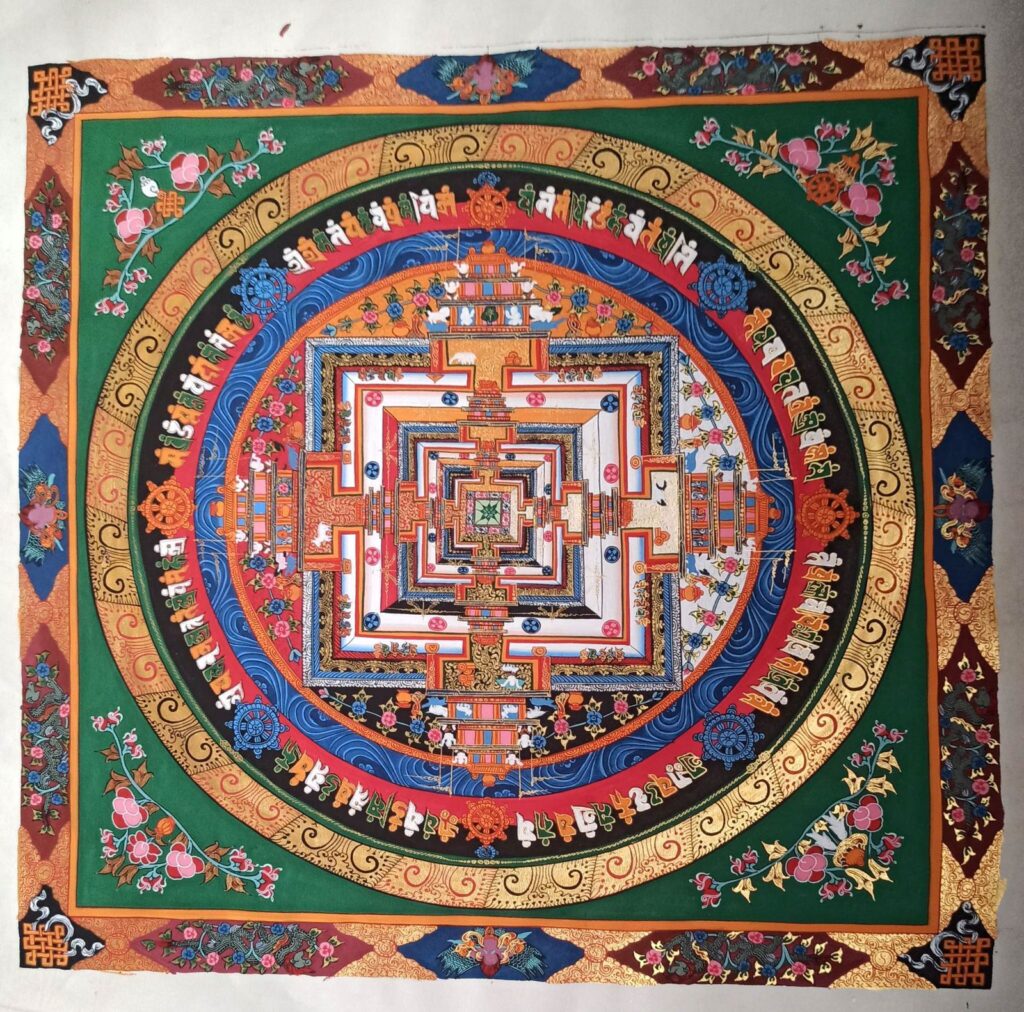
Here are some key aspects of Buddhist mandalas:
1. Symbolism: Mandalas are rich in symbolism. They often feature a central deity or symbol, surrounded by an intricate pattern of geometric shapes and symbols. Each element within the mandala carries a specific meaning, representing aspects of the spiritual journey, the universe, and the mind.
2. Meditation and Visualization: Mandalas are used as focal points for meditation and visualization practices. Practitioners gaze at the mandala’s center and follow the intricate patterns outward, allowing their minds to become absorbed in the symbolism and energy of the mandala. This process is believed to lead to greater insight, inner peace, and spiritual awakening.
3. Transformation and Healing: Mandalas are also seen as tools for transformation and healing. By working with mandalas, individuals can explore their inner selves, address emotional and psychological issues, and promote mental well-being. The act of creating or coloring mandalas is considered therapeutic and can be used as an art therapy technique.
4. Cosmic and Microcosmic Representation: Mandalas are often seen as representations of both the macrocosm (the universe) and the microcosm (the individual’s inner world). The intricate patterns and symmetries reflect the order and interconnectedness of all things in the cosmos.
5. Mandala Types: There are various types of Buddhist mandalas, each with its own unique purpose. The most common include the “Palace Mandalas” that depict the celestial abode of a specific deity, and the “Yantra Mandalas,” which focus on geometric patterns to represent the essence of a particular deity.
6. Sand Mandalas: One of the most famous forms of mandala art is the creation of sand mandalas by Tibetan Buddhist monks. These elaborate mandalas are meticulously crafted using colored sand and are often constructed in a public setting. Once completed, the mandala is ceremonially destroyed, symbolizing the impermanence of all things, a central concept in Buddhist philosophy.
7. Spiritual Evolution: Mandalas are seen as tools for spiritual evolution, guiding practitioners toward a deeper understanding of themselves and the world around them. Through the process of engaging with mandalas, individuals can cultivate mindfulness, compassion, and wisdom.
In conclusion, Buddhist mandalas are not just stunning works of art; they are deeply spiritual and symbolic creations that serve as powerful aids in meditation, self-discovery, and the pursuit of enlightenment. These intricate designs offer a visual representation of the interconnectedness of all things and the path to inner and outer harmony. Whether through creation, meditation, or contemplation, engaging with Buddhist mandalas can be a transformative and enlightening experience.
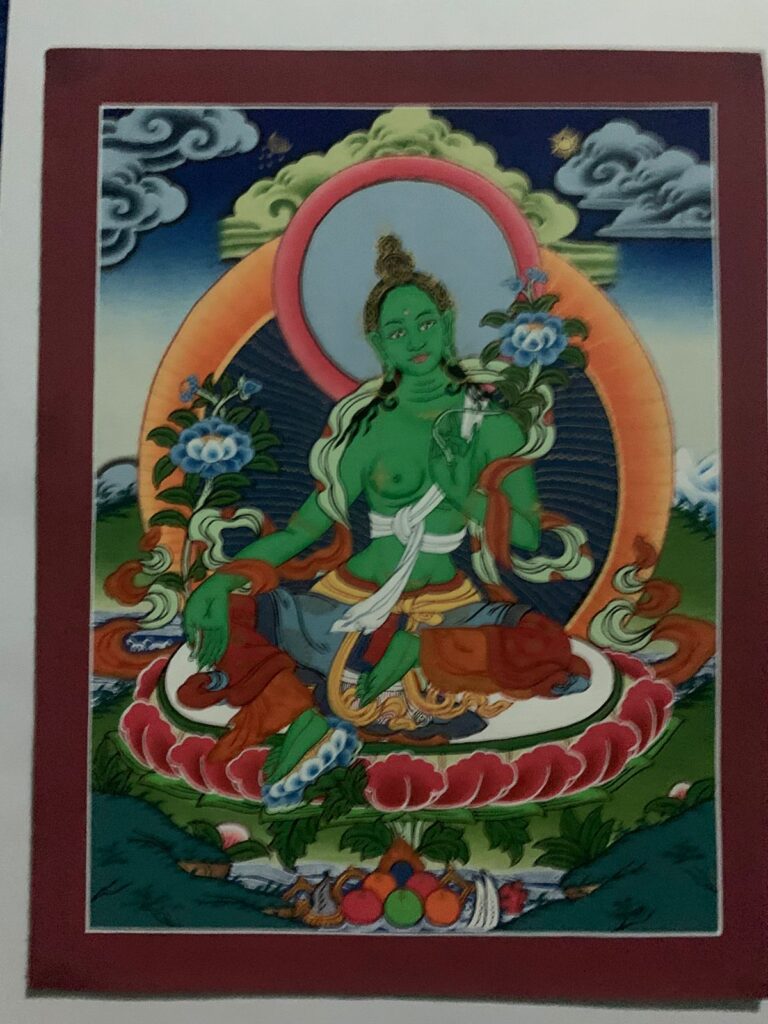
Green Tara, often referred to as “Syamatara” in Sanskrit, is one of the most revered and widely worshipped goddesses in Tibetan Buddhism. She is known as the embodiment of compassion and represents the protective and nurturing aspects of the divine feminine. Green Tara is typically depicted as a youthful and radiant goddess seated gracefully on a lotus throne. She is often portrayed with one leg extended, ready to spring into action to assist those in need.
Key attributes and symbolism of Green Tara include:
Green Color: Green Tara is often depicted with green skin, symbolizing her association with the enlightened activity of compassion. Green is also a color of growth, vitality, and renewal.
Lotus: She is often seated on a lotus, which symbolizes purity, enlightenment, and the ability to rise above the muck of worldly suffering.
Mudras: Green Tara’s hand gestures, or mudras, vary in different depictions. Her right hand may be in the “gift-giving” mudra (varada mudra) to signify her readiness to bestow blessings and boons, while her left hand is often in the “protective” mudra (abhaya mudra), offering fearlessness and protection to her devotees.
Eyes on Forehead and Hands: Green Tara is sometimes depicted with eyes on her forehead and the palms of her hands, symbolizing her vigilant awareness and omnipresence, always ready to assist and guide those in distress.
Seven Eyes: In some depictions, she may have seven eyes, with an additional eye on each palm and on her forehead, representing her ability to see and respond to suffering in all directions.
Mantra: The mantra associated with Green Tara is the famous “Om Tare Tuttare Ture Soha,” chanted by Buddhists seeking her protection and assistance in overcoming obstacles.
Materials Used to Make Buddhist Thangka Art:
Thangka art is a traditional form of Tibetan Buddhist painting that serves both as a religious icon and a form of meditation. Thangkas are typically created using intricate and highly specialized techniques and materials, including:
Canvas: Thangkas are traditionally painted on canvas made from cotton or silk. Silk thangkas are considered more luxurious and are often used for high-quality, finely detailed works.
Pigments: Thangka artists use mineral and vegetable pigments to create their paintings. These pigments can include crushed stones and minerals like malachite, lapis lazuli, and cinnabar. Each color has symbolic significance, and the preparation of these pigments is a meticulous process.
Gold and Silver Leaf: To add luminosity and a sense of divinity to the thangka, artists often use gold and silver leaf to highlight certain elements. These precious metals are applied using a glue-like substance made from tree resin.
Brushes: Artists use specialized brushes made from animal hair, often from sable or squirrel tails. The choice of brush affects the precision and quality of the painting.
Water-Based Adhesive: A water-based adhesive called “chibu” is used to adhere the gold and silver leaf to the canvas. It is also used for other applications within the painting.
Rulers and Compasses: Thangka artists rely on precise measurements and geometric calculations to create the intricate designs found in these paintings. Rulers and compasses are essential tools for ensuring accuracy.
Spiritual Symbols: Thangka artists follow strict guidelines and iconography in their work, ensuring that each deity, symbol, and gesture is represented correctly according to Buddhist tradition.
Creating a thangka is a highly specialized and time-consuming process, often taking weeks or even months to complete, depending on the size and complexity of the artwork. The meticulous attention to detail and the use of sacred materials make thangka art not only visually captivating but also spiritually significant in Tibetan Buddhism. These paintings are used in meditation, worship, and as teaching tools to convey the teachings and principles of Buddhism.